How Altitude Changes Influence In-Play Odds Shifts During Soccer Matches at High-Elevation Stadiums
Écrit par Otto Werner · 16/9/2026
How Altitude Changes Influence In-Play Odds Shifts During Soccer Matches at High-Elevation Stadiums
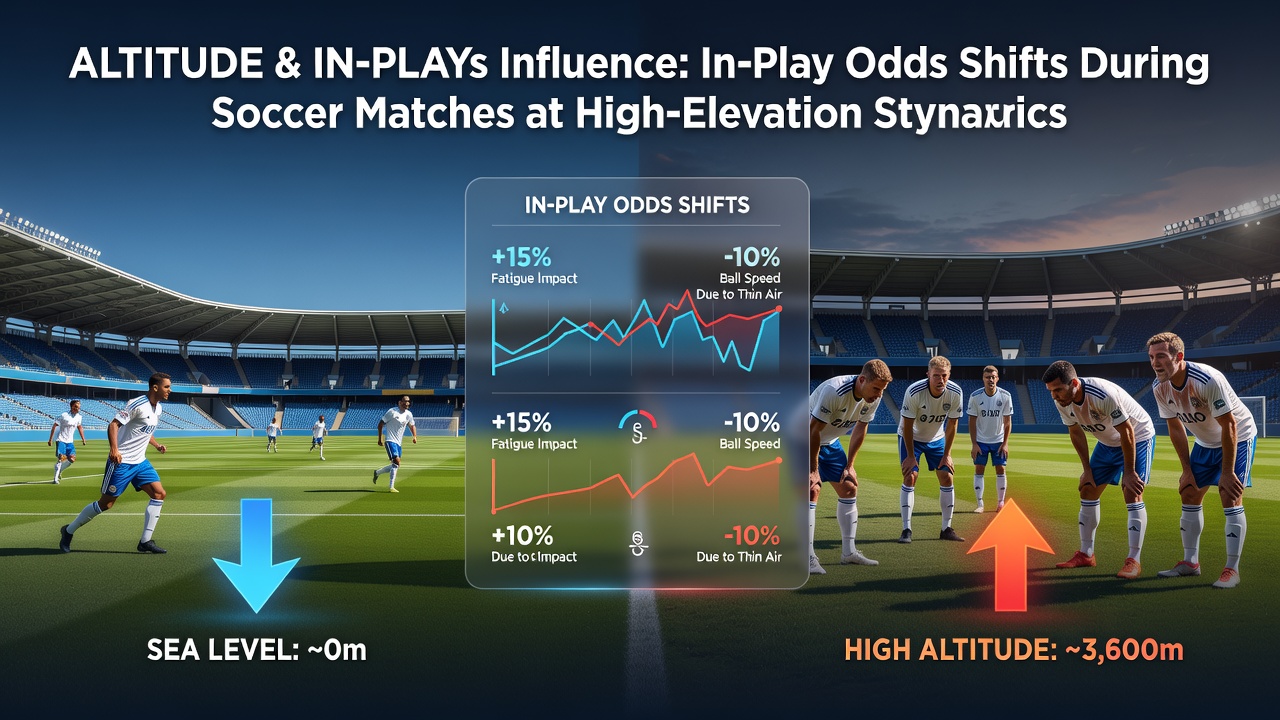
High-elevation venues create measurable differences in player output and equipment behavior that directly feed into live betting adjustments. Stadiums situated above 2,500 meters reduce oxygen availability, which alters sprint recovery times and decision-making speed within the first 15 minutes of play. Bookmakers monitor these early indicators closely because they correlate with shifts in goal expectancy and match outcome probabilities.
Physiological Demands at Elevation
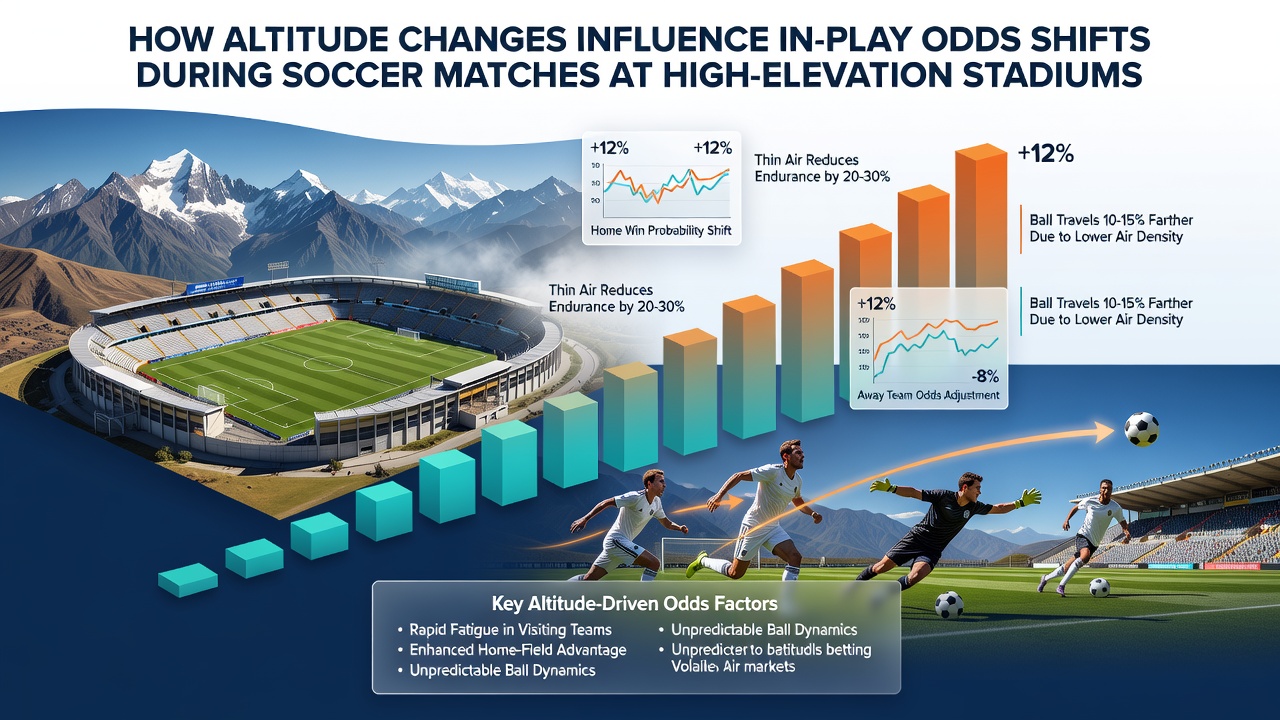
Research from South American physiology labs shows that visiting players from sea-level regions experience a 10 to 15 percent drop in repeated sprint capacity during the opening half. Local athletes who train daily above 3,000 meters maintain higher heart-rate efficiency and cover greater total distance in the second half. These patterns appear consistently in league data from Bolivia, Ecuador, and Peru, where home sides record elevated possession retention rates after the 60-minute mark.
Ball Flight and Trajectory Changes
Lower air density allows the ball to travel farther and faster when struck with the same force. Tracking data collected at Estadio Hernando Siles in La Paz reveals average shot speeds increase by roughly 4 kilometers per hour compared with matches played at under 500 meters. Goalkeepers face altered reaction windows on long-range efforts, while crosses and through balls reach targets sooner than expected. In-play models incorporate these variables by recalculating expected goals every time possession changes in the final third.
Live Market Reactions to Early Indicators
Betting platforms adjust odds within seconds of observed performance deviations. When a low-altitude team records fewer than 85 percent of its usual high-intensity runs in the first 20 minutes, algorithms shorten the home-team win price and lengthen the draw or away price. Volume spikes on over-2.5 goals markets occur because the ball moves more quickly across the pitch, increasing the frequency of shots and set-piece opportunities. Operators cross-reference real-time GPS metrics with historical altitude benchmarks to fine-tune these shifts before the half-time interval.
Case Examples from Andean Venues
Matches at Quito's Estadio Olímpico Atahualpa demonstrate how visiting sides often concede early goals when they press high without sufficient acclimatization. In contrast, games at Cuzco's 3,400-meter stadium show a later surge in home-team scoring once fatigue compounds for opponents. Analysts at regional federations note that these timing differences produce distinct in-play patterns: early-goal markets activate quickly in Quito, whereas late-goal lines see heavier trading in Cuzco. Teams that rotate squads with altitude-specific training camps reduce the magnitude of these swings, which in turn stabilizes the odds movement after the initial 30 minutes.
Data Integration in Modern Pricing Models
According to findings published by the National Center for Biotechnology Information, heart-rate recovery intervals extend by an average of 12 seconds at 3,600 meters. Pricing engines ingest this type of biometric information alongside traditional statistics such as expected goals and pass-completion percentages. When combined with wind-speed readings and pitch-surface temperature, the models generate narrower ranges for live over/under lines during the second half. European and North American operators that cover South American fixtures have adopted similar multi-factor inputs to remain competitive on in-play offerings.
Acclimatization Protocols and Their Market Footprint
Clubs that arrive 10 to 14 days before kickoff show smaller deviations from baseline performance metrics. FIFA technical reports and studies coordinated through CONMEBOL document reduced injury rates and steadier possession numbers under these conditions. Markets reflect the difference: pre-match prices move less dramatically once teams publish acclimatization schedules, and in-play volatility decreases because score-line swings become less extreme. Conversely, teams that fly in 48 hours before the match trigger sharper mid-game corrections when early running data deviates from norms.
Conclusion
Altitude-driven changes in physiology and ball behavior produce predictable yet dynamic effects on soccer matches played at high elevation. These effects translate directly into measurable shifts in live betting probabilities as algorithms process real-time performance data. Venues across the Andes continue to supply the clearest examples, and the integration of biometric and environmental inputs has become standard practice for operators covering these fixtures. As more granular tracking systems come online, the precision of in-play adjustments at elevation will continue to evolve in line with the underlying physical realities of the environment.